

CANVAS: AN HAE OVERVIEW

Hereditary angioedema (HAE) is a rare genetic condition that can cause unpredictable, severe, and even life-threatening swelling attacks in various parts of the body.1
Causes and Genetics of HAE
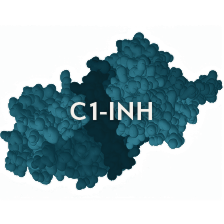
The body makes a protein called a C1 esterase inhibitor (C1‑INH), which plays a role in controlling swelling.
People with HAE typically have low levels of C1‑INH, or their C1‑INH does not work as well as it should.2
Genes give the body instructions to make proteins.
The SERPING1 gene tells the body how to make the C1‑INH protein. HAE is usually caused by changes in this gene.3
Other genes provide instructions for different proteins that also play a role in controlling swelling. Learn more about the science of HAE attacks: HAE Illustrated.

HAE can run in families. If one parent has HAE, their child has a 50/50 chance of having it too.4
Sometimes a person can be the first in their family to have HAE. This happens in about 25% of cases.5
Types of HAE
Type I HAE:
People with Type I HAE don’t have enough C1-INH. This is the most common type of HAE.1
Type II HAE:
People with this type have enough C1-INH, but it doesn’t work correctly.1
HAE with normal C1‑INH:
In some cases, C1‑INH levels are normal. The cause is unknown, and research continues so we can better understand why this happens.4
Go Beyond the Basics
Stay Informed
References:
- Ghazi A, Grant JA. Hereditary angioedema: epidemiology, management, and role of icatibant. Biologics. 2013;7:103-113. doi:10.2147/BTT.S27566
- Wedner HJ. Hereditary angioedema: pathophysiology (HAE type I, HAE type II, and HAE nC1-INH). Allergy Asthma Proc. 2020;41(Suppl 1):S14-S17. doi:10.2500/aap.2020.41.200081
- De Maat S, Hofman ZLM, Maas C. Hereditary angioedema: the plasma contact system out of control. J Thromb Haemost. 2018;16(9):1674-1685. doi:10.1111/jth.14209
- Busse PJ, Christiansen SC, Riedl MA, et al. US HAEA Medical Advisory Board 2020 guidelines for the Management of Hereditary Angioedema. J Allergy Clin Immunol Pract. 2021;9(1):132-150.e3. doi:10.1016/j.jaip.2020.08.046
- Zuraw BL. Clinical practice. Hereditary angioedema. N Engl J Med. 2008;359(10):1027-1036. doi:10.1056/NEJMcp0803977
This information is for educational purposes only and is not intended to constitute medical advice. For all healthcare decisions, talk with your healthcare team.