

MOSAIC: LIVING WITH HAE

The Full Portrait Includes Mental, Logistical, and Professional Impacts
A complete picture of life with HAE means more than managing attacks, it means managing a lifelong diagnosis. A recent survey found that 68% of people living with HAE ranked the need for lifetime treatment as a top concern.1*
The Constant Mental Weight
You may feel like HAE is always top of mind. In a survey, most people said they think about it weekly, and many think about it daily.1* Worrying about future attacks, unpredictability, and emotional stress can all be a part of life with HAE.2,3†‡ Unfortunately, stress itself has been identified as a trigger for attacks.4§

Sixty-one percent thought of HAE weekly1*

Fifty-one percent were anxious and frustrated after their last attack.1*

The Ongoing Coordination
A recent survey identified insurance delays and denials as a major source of frustration,5* leading to negative emotions.6||,7¶ In turn, respondents said these delays and denials led to more frequent attacks when they were left without access to treatment.6||

Ninety percent said insurance delays and denials caused anxiety.6||

Seventy percent said attacks were more frequent due to treatment gaps from these insurance delays.6||
The Impact on Your Career
HAE can have a real impact on your career. Some people have even turned down job opportunities to avoid stress that can trigger attacks.5* For many, continued access to preventive treatment is also a consideration when evaluating job opportunities.5* If HAE has shaped your career choices, you are not alone.4§
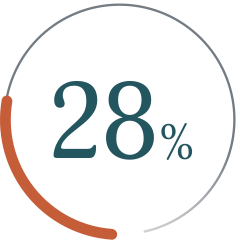
Twenty-eight percent turned down a job to avoid stress.5*
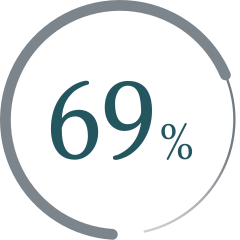
Sixty-nine percent have had career choices limited by HAE.4§
2025 survey of 100 adults living with HAE.
2011 survey and interviews of 30 people age 12+ living with HAE.
2017 review of tools for patient-reported outcomes in HAE.
2007 survey of 457 people living with HAE.
2022 survey of 20 adults living with HAE.
2020 consensus meeting of 9 HAE experts from the US and Europe.
HOW IS HAE AFFECTING YOUR LIFE? DISCUSS YOUR BIGGEST STRESSORS WITH YOUR DOCTOR.
Attacks & Triggers
Stay Informed
References:
- Busse P, Wilson K, Farkas H, et al. Barriers to achieving normalization among people living with HAE on existing treatments. Presented at: American College of Allergy, Asthma and Immunology (ACAAI) 2025 Annual Scientific Meeting; November 6-10, 2025; Orlando, FL. ePoster R108.
- Bygum A, Aygören-Pürsün E, Beusterien K, et al. Burden of illness in hereditary angioedema: a conceptual model. Acta Derm Venereol. 2015;95(6):706-710. doi:10.2340/00015555-2014
- Bygum A, Busse P, Caballero T, Maurer M. Disease severity, activity, impact, and control and how to assess them in patients with hereditary angioedema. Front Med (Lausanne). 2017;4:212. doi:10.3389/fmed.2017.00212
- Lumry WR, Castaldo AJ, Vernon MK, et al.. The humanistic burden of hereditary angioedema: impact on health-related quality of life, productivity, and depression. Allergy Asthma Proc. 2010; 31:407-414. doi:10.2500/aap.2010.31.3394.
- Busse P, Wilson K, Farkas H, et al. Rethinking the management of hereditary angioedema. Allergy Asthma Proc. 2026;47(2):92-101. doi:10.2500/aap.2026.47.260004
- Arora NS, Nelson B, Carpenter L, et al. Consequences of insurance coverage delays and denials for patients with hereditary angioedema. J Allergy Clin Immunol Pract. 2023;11(8):2432-2438.e1. doi:10.1016/j.jaip.2023.03.006
- Bork K, Anderson JT, Caballero T, et al. Assessment and management of disease burden and quality of life in patients with hereditary angioedema: a consensus report. Allergy Asthma Clin Immunol. 2021;17(1):40. doi:10.1186/s13223-021-00537-2
This information is for educational purposes only and is not intended to constitute medical advice. For all healthcare decisions, talk with your healthcare team.